Start of Regular Consults with Allergy Paed
Date Posted: 9 May 2023
Child's age in this post: 20 months old
The events in this post took place in: early 2022
Hello! Today, I'm sharing about my first of many regular visits to the Paediatric Allergy Services Department at KK Women's and Children's Hospital (KKH), and discussing the importance of an allergy action plan, tracking allergy trends, and always having an EpiPen handy.
TLDR:
- Keep a record of all allergy events – details like what, where, and when can be crucial.
- Share your child's allergy action plan with caregivers and teachers.
- Always carry an EpiPen if your child has severe allergies.
- Schedule regular allergy tests to monitor trends.
First visit to KKH's Paediatric Allergy Services Dept
Our visit was set up through a referral from a polyclinic due to a separate issue. We found ourselves in front of a paediatrician specialising in paediatric allergies. Our first visit was quite thorough. We had to recount all of our child's previous dairy reactions and the circumstances surrounding them, such as "What did she eat? How long before the reactions started? How long did the rashes/hives last? What medication was given? When was the medication given?" and so forth.
The advice we received was simple but crucial: avoid the allergen and allow the child's body to 'forget' it before reintroducing it. I know different doctors have varying opinions on this, but that was what we were told.
We were then given an "Allergy Action Plan," a document outlining the different "stages" of an allergic reaction, signs to look out for, when to administer antihistamines to the child, when to use an EpiPen, and when to call an ambulance. This plan is essential to share with any of the child's caregivers or teachers, ensuring they can act appropriately when you're not around.
Example of an Allergy Action Plan
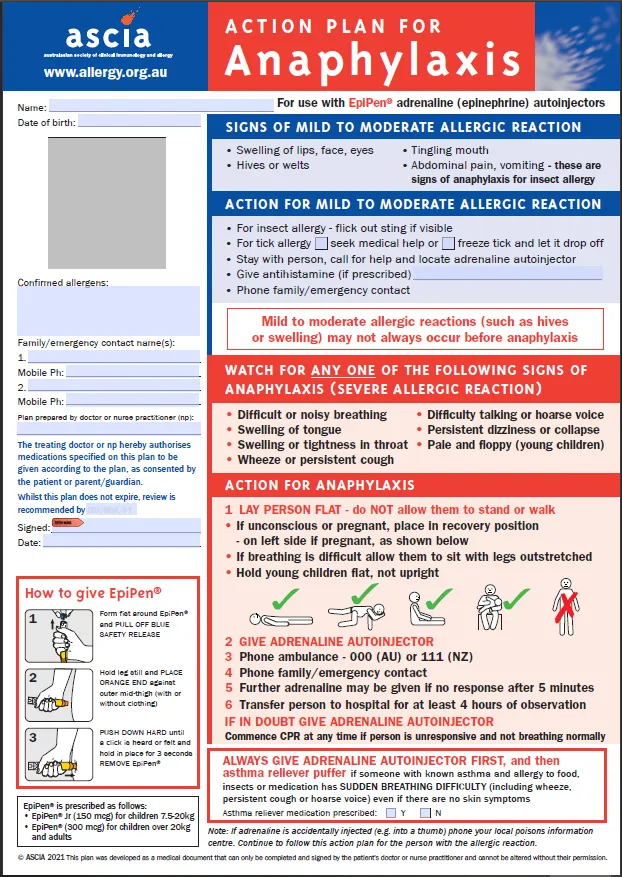
source: https://www.allergy.org.au/hp/anaphylaxis/ascia-action-plan-for-anaphylaxis
We were also advised to schedule follow-up skin prick tests every six months to track the allergy trend and to replenish our EpiPens as needed.
Overall, we left the consultation with an allergy action plan, a recipe and instructions for a cupcake food challenge aka oral food challenge allergy test (I'll talk about this in another post), and an extra EpiPen (so we always have two on hand).
Takeaways
Here's what I learned: maintaining a record of each event leading to an allergic reaction is crucial for reference and tracking. Document everything – what, where, and when your child encountered the allergen. Ensure copies of the allergy action plan are with your child's caregivers or teachers for swift action if an allergic reaction occurs. If your child's allergy is severe, never leave home without an EpiPen. Lastly, organise regular follow-ups to stay updated on your child's allergy trend.
Back to Post Listings